
Quartz vs Granite Countertops: Which Is Right for Your Kitchen?
Choosing between quartz and granite is one of the most important decisions in a kitchen remodel. Both are excellent materials used in homes throughout the Greenville–Spartanburg Upstate, but they have meaningful differences in composition, maintenance, appearance, and cost. Here is an honest, side-by-side comparison to help you decide.
What Is Quartz?
Quartz countertops are engineered stone—made from approximately 90–94% ground natural quartz crystals bound with polymer resins and pigments. This manufacturing process creates a non-porous, consistent surface available in hundreds of colors and patterns, including options that convincingly mimic the look of natural marble and granite. Because the material is manufactured, you can select your pattern and know exactly what every slab will look like.
What Is Granite?
Granite is 100% natural stone, quarried in large blocks and cut into slabs. Each slab has unique patterns, veining, and color variations created by nature over millions of years. No two granite slabs are identical, which is part of its appeal for homeowners who want a one-of-a-kind countertop. Granite is available in a vast range of colors, from subtle whites and grays to dramatic blues and blacks.
Durability Comparison
Quartz: Extremely durable and resistant to scratching, staining, and chipping. The non-porous surface does not absorb liquids, making it highly resistant to stains from wine, coffee, and oils. However, quartz can be damaged by excessive heat—you should always use trivets for hot pans straight from the stove or oven.
Granite: Very durable and naturally heat-resistant—you can set a hot pan on granite without damage, which is a significant practical advantage for active cooks. However, granite is porous and requires periodic sealing (typically once a year) to prevent staining. Unsealed granite can absorb oils, wine, and acidic liquids over time.
Maintenance
Quartz: Very low maintenance. Clean with mild soap and water or any non-abrasive household cleaner. No sealing required, ever. This makes quartz ideal for busy kitchens and families who want a beautiful surface without ongoing upkeep commitments.
Granite: Requires annual sealing to maintain its stain resistance—a simple process but one that must not be skipped. Daily cleaning with a stone-safe, pH-neutral cleaner is recommended. Acidic substances like lemon juice, tomato sauce, or wine can etch unsealed surfaces if left in contact too long.
Appearance
Quartz: Offers consistent color and pattern across slabs. Modern manufacturing can replicate the look of marble, concrete, and natural stone with remarkable accuracy. Ideal if you want a uniform, predictable look throughout your kitchen. Veined patterns that mimic Calacatta marble are among the most popular quartz options.
Granite: Every slab is unique. The natural movement, depth, and variation of granite are difficult to replicate with any manufactured product. If you value natural beauty and want a countertop that is truly one-of-a-kind, granite delivers. We recommend visiting a slab yard to select your specific granite slab in person—photos rarely capture the full character.
Cost Comparison
Quartz and granite are in a similar price range for Greenville-area installations, though costs vary by specific slab or color. Common granite colors tend to be slightly less expensive than popular quartz options, while rare or exotic granite slabs can be significantly more expensive than any quartz. Mid-range quartz and mid-range granite are often comparable in total installed price. The fabrication and installation process is similar for both materials.
Best Uses
Choose quartz if: You want low maintenance, consistent appearance, and maximum stain resistance. Quartz is excellent for kitchen islands, prep areas, bathroom vanities, and any surface where you want worry-free performance.
Choose granite if: You want natural beauty, heat resistance, and a unique slab that no one else has. Granite works well for kitchen perimeters, areas where hot items may be placed directly on the surface, and homeowners who appreciate natural stone character.
Can You Mix Both?
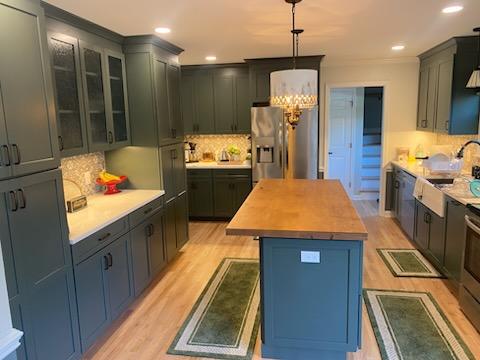
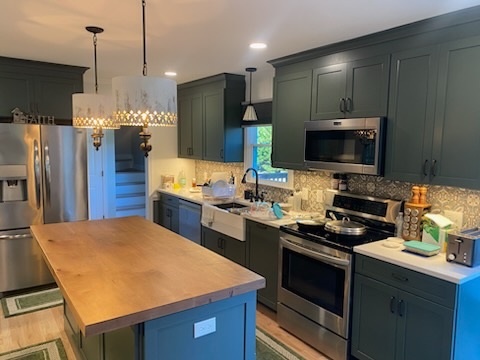
Absolutely. Some homeowners use granite for the main kitchen countertops and quartz for the island, or vice versa. Mixing materials adds visual interest and lets you take advantage of each material's strengths. A common combination in Spartanburg kitchen remodels is a natural granite perimeter with a clean white quartz island.
Other Countertop Options
While quartz and granite dominate the market, other countertop materials are worth considering:
- Marble: Stunning elegance but requires more maintenance. Best for low-traffic areas or homeowners who embrace the patina that develops over time.
- Butcher block: Warm, natural, and practical for prep areas. Requires oiling and can show wear, which some homeowners appreciate as character.
- Solid surface: Seamless, repairable, and available in many colors. A good mid-range option that offers flexibility.
Related Resources
- Kitchen Remodel Timeline Guide
- How to Choose a Kitchen Layout
- Bathroom Remodel Cost Factors
- Shower Tile Ideas & Maintenance
How We Help You Choose
During your free consultation, we bring material samples so you can see and feel both quartz and granite options in your home's lighting. We discuss your cooking habits, maintenance preferences, and aesthetic goals to help you make a confident choice. Our cabinets and countertops service includes full design guidance so your countertop works beautifully with your cabinetry, backsplash, and flooring. Call (864) 209-6036 to schedule your consultation, or browse our portfolio and reviews.
Get Your Free Estimate
No obligation. We'll call you back within one business day.